03 June 2026

9 min read

Modernizing Factory IT: Applying DevOps & CI/CD to Legacy Manufacturing Environments

Łukasz Ratajczyk

CTO

Linkedin

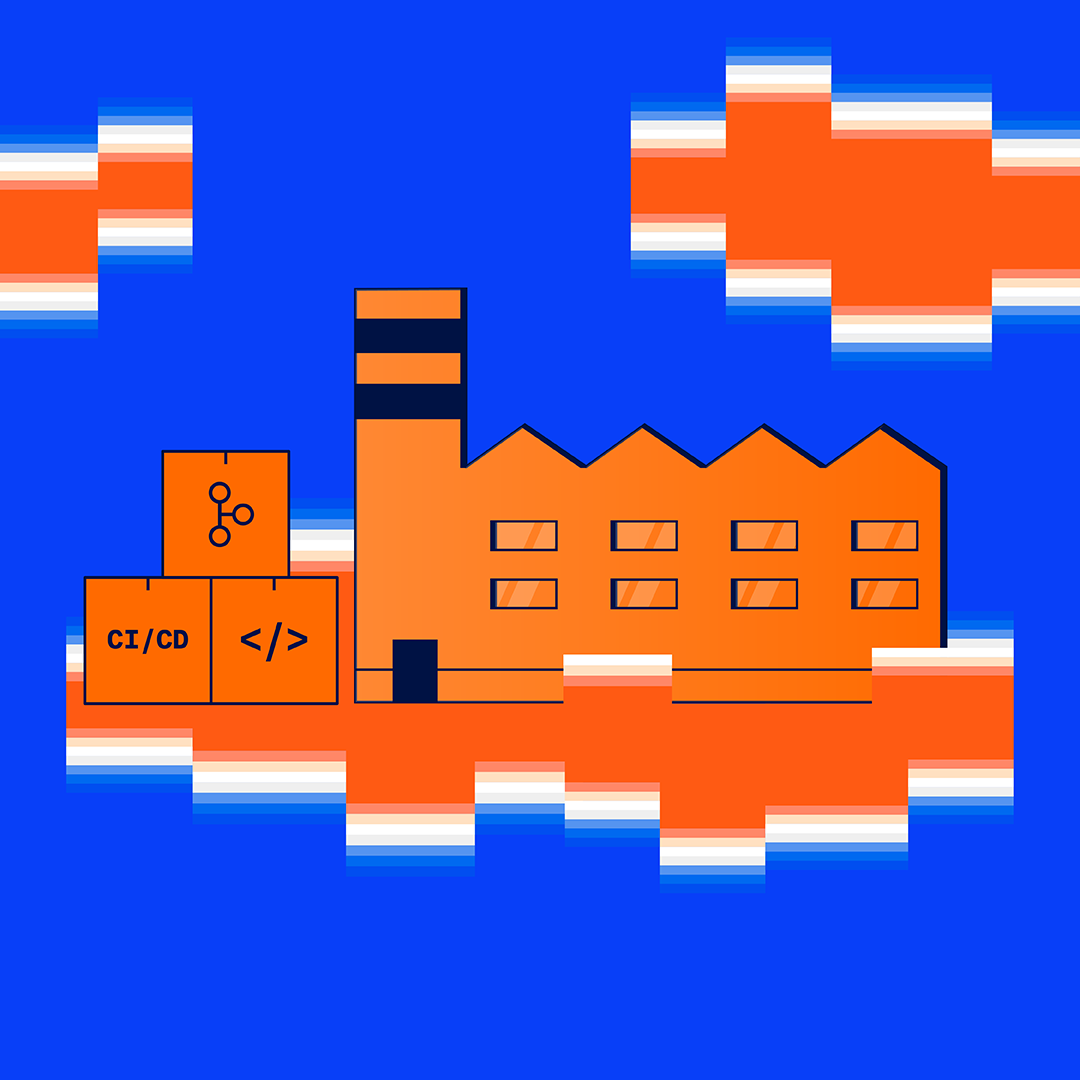
Smart factory illustration showing CI/CD automation and code-based infrastructure for modernizing legacy manufacturing IT systems

At 2 AM on a Sunday, a production line stops. A manual update failed, the documentation is missing, and the only person who knows the fix isn’t answering. This “Hero Culture” is the greatest hidden risk to your uptime.

Modernizing factory IT isn’t about moving fast and breaking things; it’s about building a digital safety net. By applying DevOps and CI/CD to legacy environments, you replace manual guesswork with Infrastructure as Code (IaC). This ensures every update is verified in a virtual sandbox before it ever touches a physical machine.

If your current process relies on human memory, how much is that hidden risk costing your OEE

Why Is Manual IT Maintenance the Greatest Risk to Factory Uptime?

Manual updates are inherently prone to human error, lack a standardized audit trail, and create “configuration drift,” where two identical production lines eventually behave differently over time. In 24/7 manufacturing, manual “fire-fighting” is not a strategy; it’s a liability that DevOps replaces with repeatable, code-based certainty. When every minor vibration or status change is handled manually, the “collect everything” approach becomes a relic of the past that drains EBITDA.

The High Cost of the “Night Shift” Update Culture

A common hidden risk in factory IT is the reliance on a “Hero Culture.” This occurs when stability depends on a single person who knows the “secret fix” or the specific quirks of an aging machine. If an update fails during a midnight window, the lack of automated protocols leads to cascading issues:

  • Production downtime: without a digital safety net, a failed manual update can halt a line for hours, turning a digital transition into a major financial drain;
  • Technical debt: relying on human memory leads to undocumented tweaks, making future factory IT modernization nearly impossible as the gap between the “as-built” and “as-maintained” system widens;
  • Human error: manual “guesswork” is the primary driver of manual updates risk, often resulting in “surprise” end-of-month invoices that frustrate the finance team;
  • Data value decay: in a manual culture, critical signals, like a temperature reading from a bearing, often lose their value before anyone can react, as the information sits in expensive storage rather than triggering an immediate alert.

By moving away from this reactive model, you stop paying for “expensive noise” and start paying for the discovery of actual problems. This shift protects company liquidity and ensures that the storage of IoT data doesn’t burn the margin.

Is DevOps Safe for 24/7 Production? Demystifying the “Startup” Myth

Yes. While startups use DevOps for speed, industrial leaders use it for predictability. By treating infrastructure as code (IaC), every change is tested in a virtual sandbox, a Digital Twin, before a single byte touches the factory floor. This approach moves manufacturing away from “just in case” hardware capacity toward a controlled operational expense that scales exactly with production volume.

Infrastructure as Code (IaC): The Blueprint for Your Digital Factory

In a devops for manufacturing model, your server configurations, network settings, and data ingestion rules are written as software scripts rather than manual setups. This creates a reliable “meter” for your technology spend. Instead of buying massive local servers that sit idle, IaC allows you to pay only for the asset intelligence you actually use.

  • Predictable Scaling: you can add new machines or entire plants to your dashboard without doubling your cloud budget.
  • Resource Efficiency: architecture can automatically scale down compute power during weekend shutdowns or holiday breaks, preventing the drainage of resources.
  • Asset Intelligence: by moving toward code-based management, you protect your EBITDA and overall liquidity.

How Automated Testing Pipelines Act as an Industrial Safety Net?

Think of a CI/CD pipeline as a digital Quality Control (QC) station on your production line. Just as a physical part is inspected for defects before assembly, code must pass through automated testing before it interacts with a PLC or SCADA system. This infrastructure as code manufacturing strategy ensures that only high-value insights reach the cloud.

  • Filtering at the Source: the system distinguishes between critical “signals” that prevent a $50k breakdown and the “noise” of a machine running normally.
  • Anomaly Detection: testing pipelines process high-frequency sensor data locally to find deviations before any data is transmitted.
  • Smart Ingestion: by filtering “heartbeat” signals locally and only sending “change-of-state” events, you reduce message volume and associated costs by orders of magnitude.
  • Budget Stability: utilizing reserved capacity and intelligent routing ensures that the most expensive parts of the infrastructure are only engaged when necessary.

This framework ensures that “Big Data” does not result in “Big Bills”. It provides the high-speed data access required for production while keeping the total cost of ownership within strict financial boundaries.

How to Implement CI/CD in Legacy Systems Without Replacing Hardware?

Modernizing legacy environments does not require a “rip and replace” approach. By using containerization and GitOps, you can wrap legacy logic in a modern deployment layer, allowing for version-controlled updates that work even on aging operating systems. This architecture allows you to reconcile massive production data with strict budget control by architecting for value rather than simply collecting everything.

Bridging the Gap: Containerization in OT (Operational Technology)

Containerization allows you to isolate and run software in consistent environments, regardless of the underlying hardware’s age. This is a core component of ci/cd legacy systems, as it enables “Smart Data Ingestion” at the edge.

  • Edge Filtering: process high-frequency sensor data locally to find anomalies before transmitting anything to the cloud.
  • Reduced Costs: this approach can reduce data egress fees and storage costs by up to 70% while maintaining 100% of the operational value.
  • Asset Intelligence: you pay only for the insights you actually use, moving away from large, upfront hardware investments.
  • Predictable Scaling: you can add more machines or entire plants to your dashboard without doubling your cloud budget.

Version Control for PLC and SCADA Configurations

Implementing version control via GitOps transforms how you handle industrial automation software updates. Instead of relying on manual checklists or human memory, every configuration change is tracked and logged. If an update fails, a “Rollback” becomes a single-click operation rather than a four-hour recovery mission.

  • Data Tiering: use the Medallion Architecture to organize these configurations and the data they produce.
  • Bronze Layer: holds raw, unprocessed logs at near-zero cost for regulatory compliance.
  • Silver Layer: stores cleaned and filtered data ideal for analyzing predictive maintenance costs.
  • Gold Laye: provides highly refined information for real-time screens that allow management to react instantly.

By filtering for significance, your manufacturing data platform transforms raw signals into KPI visualizations that drive floor-level decisions without threatening your financial liquidity.


case study

See How it Works in Practice

Manual infrastructure management slows down modernization and increases the risk of costly downtime. In one of our cloud transformation projects, Tenesys helped replace time-consuming manual setup with automated infrastructure provisioning, repeatable deployment processes and better control over cloud resources. The result? Faster environment setup, reduced operational complexity and infrastructure that can scale when needed — without relying on undocumented fixes or “hero culture.”

Want to achieve similar results?

Transitioning from “Fire-Fighting” to Automated Maintenance Windows

The transition begins with an audit of current manual processes, followed by the creation of a Digital Twin environment. This allows IT teams to move from reactive “fixes” to proactive, scheduled, and fully automated deployments that respect the factory’s OEE (Overall Equipment Effectiveness). By architecting for value, manufacturers can reduce storage costs by up to 70% while maintaining the operational data needed for fast decision-making.

The 4-Step Roadmap to DevOps Maturity in Manufacturing

Moving away from the “collect everything” approach requires a structured shift toward smart data ingestion. This roadmap helps stabilize the infrastructure budget while driving industrial automation forward:

  1. Process Audit. Identify where manual “guesswork” is currently causing configuration drift and unpredictable cloud bills.
  2. Edge Implementation. Deploy Azure IoT Edge or similar AWS-certified infrastructure to aggregate and process data before it hits the cloud.
  3. Data Tiering. Apply the Medallion Architecture (Bronze, Silver, Gold) to ensure you aren’t paying premium rates for rarely accessed logs.
  4. Automated Scheduling. Align your digital resource consumption with actual physical output, automatically scaling down power during shutdowns.

Reducing Downtime via Blue-Green Deployment Strategies

A core goal of DevOps is reducing downtime by ensuring that technology is a predictable operational expense. By using Blue-Green strategies—where a new update (Green) is tested alongside the current stable version (Blue)—you ensure that maintenance windows never turn into multi-hour recovery sessions.

FeatureThe “Old Way” (Manual/Risky)The “New Way” (Automated/Safe)
Update ReliabilityProne to human error and manual typosVerified via automated testing and Digital Twins
Recovery TimeHours of “fire-fighting” and manual fixesInstant single-click rollbacks
Cost Visibility“Black box” IT with surprise invoicesTotal transparency via Cost Allocation Tags
Data Strategy“Collect everything” regardless of valueSmart filtering of “noise” at the source

Using this blueprint allows the storage of your most valuable insights to remain ready for immediate action while archiving the rest at near-zero cost. This creates a sustainable cloud migration ROI where monitoring costs stay flat even as your physical footprint grows.

How Can Cost-Optimized Data Improve OEE Without Ruining Liquidity?

A cost-optimized data structure provides the “Right Data at the Right Time” to improve OEE (Overall Equipment Effectiveness) by focusing compute resources only on actionable KPIs. Instead of paying to store every minor vibration or status heartbeat, the system only triggers alerts when data patterns indicate a potential failure. This enables Predictive Maintenance that saves far more in emergency repair costs and lost production than the cloud infrastructure costs required to run the analysis.

In the factory, the “Value per Gigabyte” is the metric that matters most. A dashboard showing a 5% increase in OEE is a high-value investment, but a screen cluttered with 1,000 raw data points is just expensive noise. By filtering for significance, a manufacturing data platform transforms raw signals into KPI Visualization that drives floor-level decisions. You stop paying for the “storage of everything” and start paying for the “discovery of problems.”

This leaner approach is the only way to ensure the Scalability of IoT without threatening your Financial Liquidity. Because the storage is tiered and the ingestion is smart, you can add more machines, lines, or even entire plants to your dashboard without doubling your cloud budget. This creates a sustainable cloud migration roi where the cost of monitoring stays flat while the operational savings from reduced downtime continue to grow.

our service

Replace Manual Infrastructure Changes with Reliable Automation

When factory IT depends on manual updates, undocumented fixes and individual know-how, every deployment becomes a risk to uptime. Configuration drift, failed maintenance windows and slow recovery can quickly turn legacy infrastructure into a hidden cost center. With Infrastructure as Code, CI/CD automation and DevSecOps practices, you can standardize changes, test updates before production and bring predictability to even the most complex legacy environments.

Check out our service:

How Does Tenesys Secure the Modernized Factory Floor?

Tenesys integrates 24/7 Managed Security Services directly into the DevOps pipeline—a practice known as DevSecOps. We ensure that every automation script and container image is scanned for vulnerabilities before it ever reaches the production floor. This provides a constant “Security Guard” for your digital assets, transforming security from a reactive burden into a built-in feature of your infrastructure.

Continuous Monitoring: Beyond the Perimeter Fence

Modern factory security requires more than just a firewall; it requires managed security services that understand the difference between a normal controller update and a potential breach. By utilizing AWS-native security tools and our proactive monitoring systems, we provide total visibility into the OT environment without disrupting machine operations.

  • Vulnerability Scanning: we automatically check every update for “backdoors” or outdated code before it is deployed.
  • Proactive Alerts: our systems identify anomalies in data traffic that could signal an attack, allowing for immediate isolation of the affected segment.
  • Peace of Mind: leadership can rest easy knowing that legal compliance and industrial safety are managed by experts, allowing the internal team to focus on output rather than constant threat hunting.

This DevSecOps manufacturing approach ensures that your transition to the cloud is a secure investment that protects both your physical machines and your company’s financial liquidity.

Ready to End the Cycle of Manual Update Failures?

Don’t let legacy processes and “Hero Culture” throttle your factory’s potential. Maintaining a competitive edge requires an infrastructure that is as efficient and predictable as your production line.
Download our “Industrial DevOps Transition Guide” or book a 60-minute Infrastructure Audit with a Tenesys AWS expert to see how we can turn your maintenance windows into a strategic advantage.

Łukasz Ratajczyk

Łukasz Ratajczyk

CTO

CTO with 12 years of experience across various industries. Specializes in optimizing cloud environments and modernizing infrastructure. A certified cloud architect, he leads a team of experienced DevOps engineers at Tenesys. Outside of work, he is a traveler and mountain biker.

Linkedin